How to Style a Linen Cap Sleeve Top for Naturals
A tailored Natural styling guide for balancing a relaxed, standard length linen top through the lower half, hem boundary, and finishing texture.
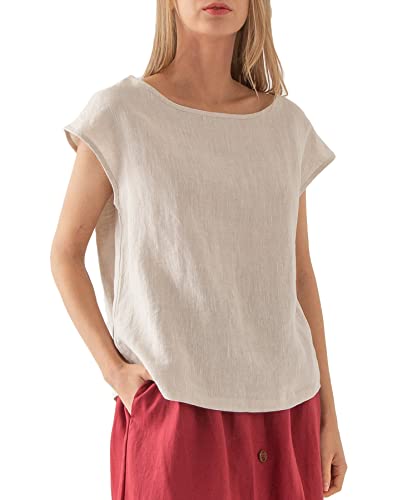
This 100% linen cap sleeve top can work for Natural lines when the outfit continues its easy width instead of abruptly squeezing it into a sharp silhouette. The listing describes a lightweight, non stretch, relaxed, pull on top with a standard length. That makes proportion the main decision: choose a lower half with enough visual presence, set one clear boundary at the hem or waist, and repeat the top's relaxed character once elsewhere. The caveat is simple: the listed shape is roomy, so compare its measurements with a top you already own before treating “relaxed” as a sizing answer.
Read the top before building the outfit
Start with the cut rather than the color. The short cap sleeve and broad listed shoulder measurement create a visually open upper line, while the standard hem gives more length than a cropped tee. In size Large, the listing gives a 44.1 inch bust, 22.8 inch shoulder, and 24.1 inch center back length. Those numbers are most useful as comparison points, not as a promise about how the top will fit every person.
Lay a familiar top flat and compare the bust, shoulder, and back length. If the linen top is noticeably broader, plan for the upper body to carry the outfit's relaxed volume. If its hem also lands below your preferred waistband, decide in advance whether you want that longer vertical to remain visible or whether a partial tuck will create a cleaner break.
For Natural styling, the aim is not to erase the ease. It is to make the ease look connected. A very narrow, rigid bottom can make the top appear detached, while an equally loose bottom without any boundary can blur the whole outfit. The useful middle ground is relaxed shape plus one readable point of structure.
Choose the lower half by visual weight
Use the bottom to answer the top's volume. Straight jeans, easy trousers, or a softly shaped midi skirt can all work because each has enough visual weight to meet a relaxed upper half. The exact choice depends on whether you want continuity, contrast, or a longer uninterrupted line.
- Choose straight or gently wide trousers when you want the linen texture to flow into an equally easy silhouette.
- Choose a softly shaped skirt when you want movement below the waist without adding a hard, tailored break.
- Choose substantial straight leg denim when you want contrast, then keep the shoe and accessories visually uncomplicated.
The independent styling examples in Who What Wear's linen trouser guide show relaxed linen working with clean, simple separates and extending beyond peak summer. The transferable lesson is not that this top requires linen trousers. It is that one relaxed piece reads more intentionally when the surrounding shapes are calm enough to let its texture lead.
Set one boundary at the waist or hem
A standard length top offers three useful treatments: leave it open, use a partial front tuck, or roll the hem inward for a temporary shorter line. Pick one treatment according to the lower half rather than applying the same tuck to every outfit.
Leave the hem open over a straighter bottom when the side view still has a clear line and the fabric does not bunch at the hip. This keeps the pull on shape honest and supports an unforced Natural silhouette. A small front tuck works better when a fuller trouser or skirt needs the waist area to register. Keep the tuck narrow so the rest of the hem can fall naturally.
The inward roll is a styling check, not a permanent alteration. Fold a little fabric under at the front and look at the balance before committing to a tuck. If the outfit becomes clearer, the original hem was probably competing with the waistband. If it becomes boxy, restore the full length and simplify the lower half instead.
Because the fabric is listed as non stretch, do not rely on tension to hold a complicated knot. A simple boundary is more consistent with the garment's construction. It also keeps the decision focused on proportion rather than turning the top into a different shape.
Finish with texture, then extend the formula
Repeat one quality from the top elsewhere: an organic looking surface, a softly substantial shoe, or a relaxed bag shape. One repetition is enough. Several rustic textures at once can make the outfit feel themed, while a single echo connects the linen to the complete look.
For warm weather, keep the lower half and shoe visually light. As temperatures shift, add an open overshirt, unstructured jacket, or cardigan that does not pinch the cap sleeve. The formula stays the same: continue the easy upper line, preserve one boundary, and let one texture recur. That gives the top use beyond a single summer uniform without claiming it is suited to every climate.
The listing says the top is machine washable, but the care label that arrives with the garment should control the actual wash routine. Since linen texture is part of the visual effect, assess the surface after washing before building a highly polished outfit around it.
If you want more combinations after setting the proportions, the broader linen blouse outfit ideas offer a useful next step. Keep this tailored rule in place: lower half weight first, one hem boundary second, and one repeated texture last. That sequence lets the relaxed top remain relaxed while giving the outfit a clear visual decision.