How Naturals Can Style Black Round Toe Loafers
A troubleshooting guide to connecting a compact black slip on loafer with Natural trousers, denim, texture, and office outfits.
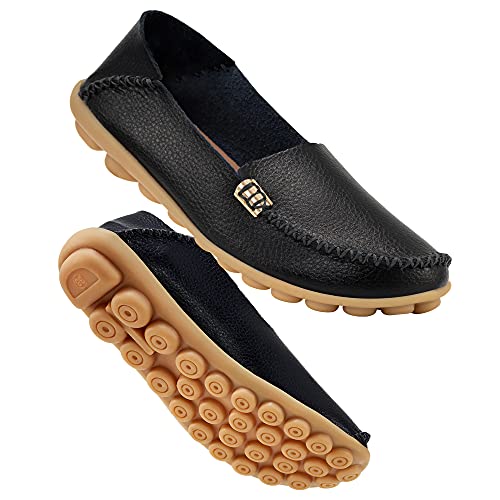
The DUOYANGJIASHA black round toe loafers can work in a Natural outfit when the closed shoe feels connected to the clothes above it, not like a compact formal stop at the floor. Start with heel hold and upper ease, then adjust the hem and texture. The listing identifies a pull on flat with a rubber sole and describes flexible, lightweight construction, but those details do not predict how the pair will work for every wearer.
Start with heel hold and upper ease
A slip on succeeds only if it lets you keep your usual stride. Try the loafers indoors on a clean surface with the socks or hosiery you would actually wear. Walk forward, turn, and take a few stair height steps. The heel should stay aligned without toe gripping, and the upper should not press sharply across the widest part of the forefoot.
Treat those as two separate checks. A heel that lifts can make you shorten your step even when the front feels roomy. A heel that stays put does not cancel pressure across the vamp. If either problem appears immediately, styling changes will not solve it.
The product page describes the pair as flexible and lightweight, which is useful construction information rather than a guaranteed wear result. Flex the shoe gently in your hands and compare that movement with what you feel while walking. Do not assume a flat sole supplies the cushioning or support you need.
Independent feedback is also mixed. A summary of user responses reports frequent positives around styling, ease, and cushioning, while arch support and slip resistance are inconsistent. Use that pattern to define your checks, not to forecast your result.
Use this first pass decision list:
- Keep the pair if your heel remains aligned through normal steps.
- Reconsider it if the upper leaves persistent pressure across the vamp.
- Check the sole on the indoor surfaces you expect to encounter.
- Judge support with your own workday and walking needs in mind.
Keep the round toe connected to the hem
A black rounded toe creates a small, dark shape. With Natural styling, the easiest way to keep it from looking pinched is to give it enough visual runway. Straight jeans, relaxed trousers, and softly tapered pants can all work when the hem reveals most of the toe and does not pile heavily on top of the shoe.
Start with a hem that lands near the top of the loafer or breaks only slightly. If the pants are very wide, let the fabric skim rather than swallow the shoe. If the pants are cropped, leave a deliberate span of ankle or sock instead of a narrow accidental gap. The aim is an easy transition, not a precise universal measurement.
When the shoe still looks too compact, change the hem before adding accessories. A small cuff can introduce a clean break in denim. A full length relaxed trouser can create a longer sweep, provided the toe remains visible while walking. Both options give the shoe a clearer relationship to the outfit.
Color can help, too. Black denim makes a continuous column, while faded blue denim softens the contrast through its casual surface. With tan, olive, or stone trousers, repeat black once near the middle of the outfit, perhaps in a belt, knit stripe, or bag detail. One repeat is enough to make the loafer look intentional.
Use texture continuity instead of extra polish
The rounded toe and plain black finish do not need a stack of formal accessories. Naturals can make the loafer feel more at home by repeating its easy practicality through tactile, relaxed materials: washed denim, a slub knit, a brushed jacket, a supple belt, or a softly structured bag.
Choose one texture relationship rather than trying to match everything. With dark denim, a visible knit grain keeps the outfit from becoming one flat block. With fluid trousers, a matte belt or softly grained bag can bridge the smooth fabric and the black shoe. The point is continuity, not an exact material match.
Also watch the shape above the shoe. A very sharp ankle length trouser, crisp shirt, and rigid bag can make the rounded loafer seem like the least decisive part of the outfit. Loosen one element by rolling the sleeve, choosing a roomier shirt, or exchanging the rigid bag for a softer shape. You do not need to make the whole look casual.
If you want a lighter, more open finish, compare this closed vamp plan with strappy flat sandals. The sandal exposes more of the foot and creates spacing through straps; the loafer creates continuity through a single closed shape. Choose according to what the outfit needs.
Apply the checks to office and workwear outfits
For an office outfit, begin with movement rather than dress code assumptions. Pair the loafers with straight or relaxed trousers, walk the route you normally take, and see whether the heel stays aligned. Then check the upper after several minutes of standing. A closed black shoe may look work appropriate, but appearance does not establish support, traction, or long wear ease.
A simple formula is dark straight trousers, a softly structured jacket, and a textured knit or open collar shirt. Let the hem reveal the rounded toe, and keep the bag matte or gently grained. For a less formal workplace, try full length jeans with a small break, a substantial knit, and one black repeat above the shoe.
On slick floors, test the rubber sole cautiously rather than relying on broad non slip language. On days with more walking, compare the pair with shoes whose support you already know. This is especially useful when independent feedback varies: the decision should follow your actual route and the surfaces underfoot.
The final test is straightforward. Keep these loafers when the heel tracks with your stride, the upper allows easy movement, and the hem gives the rounded toe enough room to read. If the shoe still feels visually cramped, relax the hem or add texture continuity. If it changes how you walk, choose another pair.