IT Cosmetics CC+ Cream for Soft Dramatic Polish
Light is the shade, while the cream is positioned as full coverage. Use a controlled Soft Dramatic application rule and keep its SPF directions separate from cosmetic coverage.
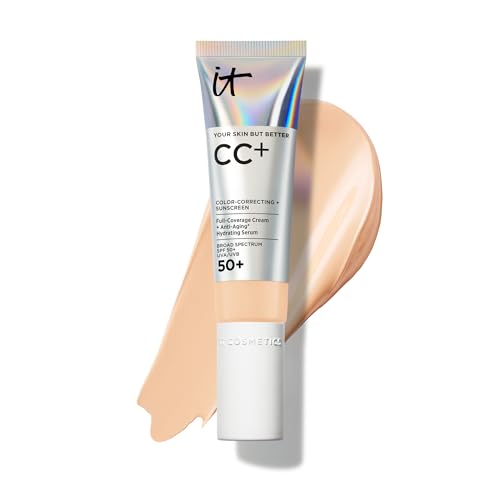
IT Cosmetics CC+ Cream in Light is a full coverage complexion product, not a sheer base. Light names the shade. For a Soft Dramatic approach, the useful move is to control where the coverage is strongest so the result looks even and intentional rather than uniformly heavy. The caveat is that application accounts vary, so no single tool or finish is guaranteed.
Light is a shade, not light coverage
The exact Light label identifies a 32 mL color correcting full coverage cream with mineral SPF 50+. That combination matters at the buying stage: choose Light because the shade appears suitable for you, not because you expect a translucent formula. Shade suitability still needs your own comparison, since a shade name cannot predict a match across every complexion.
Full coverage can serve Soft Dramatic polish when it creates a composed canvas for defined brows, eyes, lips, or sculpted color. The risk is not coverage itself. The risk is giving every part of the face equal density, which can flatten the focal structure that makes a strong makeup look feel deliberate.
The formula label lists niacinamide, hyaluronic acid, glycerin, tocopherol, oatmeal, aloe, and peptides. Those are useful facts for checking a personal ingredient list, but they do not guarantee how the cream will feel or look on your skin. Read the current label if an ingredient matters to you.
Use a Soft Dramatic polish rule
Think in terms of controlled emphasis: even the central complexion first, then decide where more coverage improves the complete look. This keeps the base in service of the larger composition. Soft Dramatic makeup can carry richness and definition, but polished impact comes from hierarchy rather than putting maximum intensity everywhere.
Use this decision rule:
- Begin with a small amount at the center of the face.
- Blend outward before deciding whether more is needed.
- Add coverage only where unevenness still competes with your chosen focal point.
- Stop when the base supports strong brows, eyes, lips, or cheek definition instead of becoming the focal point itself.
This is not a promise that one amount will suit everyone. It is a visual editing method. If the result looks masklike, remove excess or use less on the next application. If the base looks unfinished beside stronger eye or lip definition, add a small amount only where the contrast feels distracting.
The same rule helps with the Light shade. Evaluate the match in the areas where you intend to wear the cream, then look at the face, neck, and overall makeup together. A shade decision is stronger when it supports the complete composition, not merely one isolated swatch.
Choose application by the finish you want
Published experiences point in more than one direction. An Allure review reports easy blending with fingers and solid coverage. A Makeup.com reviewer describes the texture as thick, says a little goes far, and reports that fingers looked glowier while tools appeared more matte. These are individual accounts, not universal outcomes.
That variation gives you a practical starting choice. Fingers may be worth trying when you want warmth and direct control over a thin layer. A sponge or brush may be worth trying when you prefer to distribute product through a tool or explore a different finish. In either case, begin with less than your final estimate and build only after seeing the first layer in normal light.
Do not use a tool choice to chase a result that the product cannot promise. Skin preparation, amount, technique, and individual skin can all change the appearance. The honest test is whether your chosen method produces an even base that leaves room for the facial emphasis you planned.
Check the sunscreen boundary before buying
The DailyMed label lists titanium dioxide 9.0% and zinc oxide 6.3% as active sunscreen ingredients. Its directions say to apply liberally 15 minutes before sun exposure and reapply at least every two hours. It also directs users to use a water resistant sunscreen when swimming or sweating.
Those directions create a clear boundary: the cosmetic amount that gives your preferred finish may not be the amount described by the sunscreen label. Do not assume that a thin makeup layer automatically satisfies the labeled sunscreen use. Decide how you will meet your sun protection needs without relying on appearance alone.
Before purchasing, make three separate checks. First, Light must be a plausible shade for you. Second, a full coverage cream must fit the amount and finish you actually enjoy wearing. Third, the sunscreen directions must fit your plan for quantity, timing, and reapplication. Passing one check does not answer the other two.
For a Soft Dramatic result, the final goal is not simply more coverage. It is a composed base with intentional emphasis. Read Light as the shade, begin with a controlled layer, adjust your tool according to the finish you want, and treat the sunscreen instructions as their own decision. That keeps the product promise precise and the makeup result focused.