Root Texture Spray for Flamboyant Natural Volume
A practical guide to placing R+Co Zig Zag at the roots or lengths without separating volume from broad Flamboyant Natural movement.
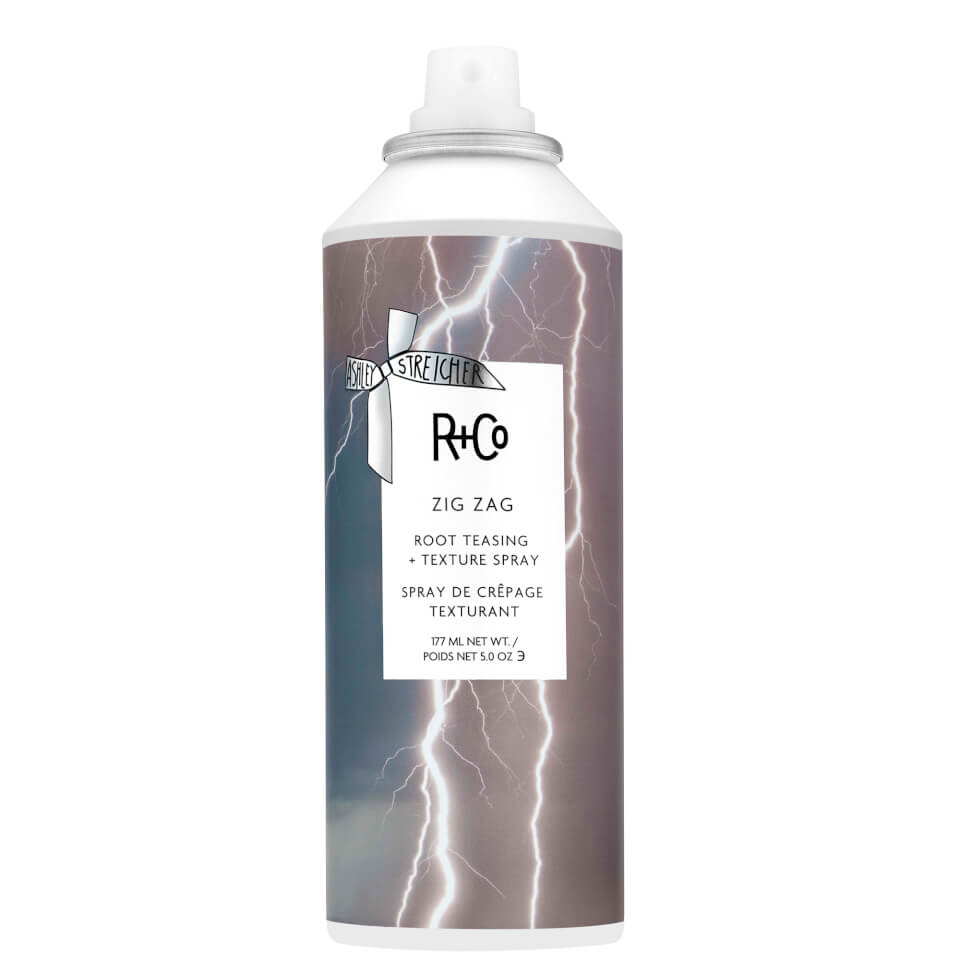
R+Co gives Zig Zag two placements on styled hair: roots for volume, or mid lengths and ends for texture. If the result looks disconnected, the useful fix is not automatically more spray. Diagnose where the shape fails first. A flat origin, enough height with quiet lengths, a compact crown, and competing texture are four different problems. Each calls for a different Zig Zag response.
Diagnosis one: the movement has a flat origin
The symptom is specific: the lengths already travel in a broad direction, but that direction seems to begin below the root area. The waves may sweep outward while the crown lies close and visually separate. This is the case for root placement, because volume can help the movement begin earlier.
The current R+Co Zig Zag directions say to use the spray on styled hair and apply it directly at the roots for volume. Treat one root zone that connects to the strongest direction in the lengths. Then view the transition between that zone and the first visible bend. The correction succeeds when the hairstyle now appears to start at the roots instead of in the middle.
Do not confuse a flat origin with a need for equal height everywhere. If the main movement rises from a side part, the useful root zone may be asymmetrical. The objective is continuity, not a uniform raised crown. Product directions identify where the spray may go; the visible transition determines whether that placement helps this Flamboyant Natural shape.
Diagnosis two: height is sufficient but the lengths go quiet
Here the crown already has presence. The problem appears farther down, where a sweep fades, a wave loses definition, or the outline stops carrying the same energy. Adding more at the roots would exaggerate the area that is already working.
R+Co assigns the other Zig Zag placement to the mid lengths and ends for texture. Use that option only where the movement drops out. Place texture near the change of direction rather than distributing it through every section. The correction succeeds when the existing root height and the renewed length texture read as one continuous shape.
This diagnosis keeps root volume from becoming the default answer. Flamboyant Natural scale does not require maximum height at the crown. It requires enough presence across the complete silhouette. When the origin is already clear, the more useful intervention can happen much lower.
Diagnosis three: the crown becomes a separate compact feature
An isolated crown is easy to recognize from the side: the raised area forms its own small shape, then the hair drops before the longer movement begins. From the front, it may read as a centered bump that competes with a broader side sweep. This is a placement failure, not evidence that the product needs another layer.
Pause root application. Reconnect the existing raised area to the neighboring styled hair before deciding whether any other zone needs texture. If the crown still reads separately, choose the lengths rather than increasing the height. The aim is to give the eye a route away from the raised area and into the rest of the hairstyle.
This correction is deliberately restrained. The exact product page supports root volume and length texture, but it does not promise that either placement will suit every starting style. Hair density, existing texture, technique, and amount can change the visible result. Follow the current label and keep the diagnosis tied to what is actually in the mirror.
Diagnosis four: roots and lengths compete equally
The symptom is visual noise. Root lift asks for attention, texture through the lengths asks for equal attention, and neither establishes the main direction. Applying the product to both areas was technically available, but the finished hierarchy is unclear.
Choose which area should lead. If the crown begins a strong sweep, keep the root effect and allow more of the lengths to remain quiet. If the longer wave is the important feature, stop building at the roots and let the length placement carry the scale. The correction succeeds when one placement sets the direction and the other supports it.
If your problem occurs while damp hair is still being shaped, the air dry cream guide covers that earlier stage. Zig Zag is assessed here only in the styled hair use described by R+Co.
Match the fix to the symptom
The four diagnoses reduce the choice to a clear sequence:
- Flat origin: use one connected root zone.
- Enough height, quiet lengths: place texture where movement disappears.
- Compact crown: pause root application and reconnect the raised area.
- Competing texture: choose roots or lengths as the lead.
This troubleshooting method is more useful than chasing the most volume. Start with the symptom, apply only the matching correction, and reassess the transition between areas. Zig Zag belongs at the roots when the hairstyle needs a clearer origin. It belongs through the lengths when existing height needs a stronger continuation. When the origin, transition, and outline read as one open composition, there is no remaining placement problem to solve.