Flamboyant Natural Air Dry Cream: Twist or Scrunch?
A practical guide to deciding whether to twist or scrunch IGK Rich Kid air dry cream for broad, connected Flamboyant Natural movement.
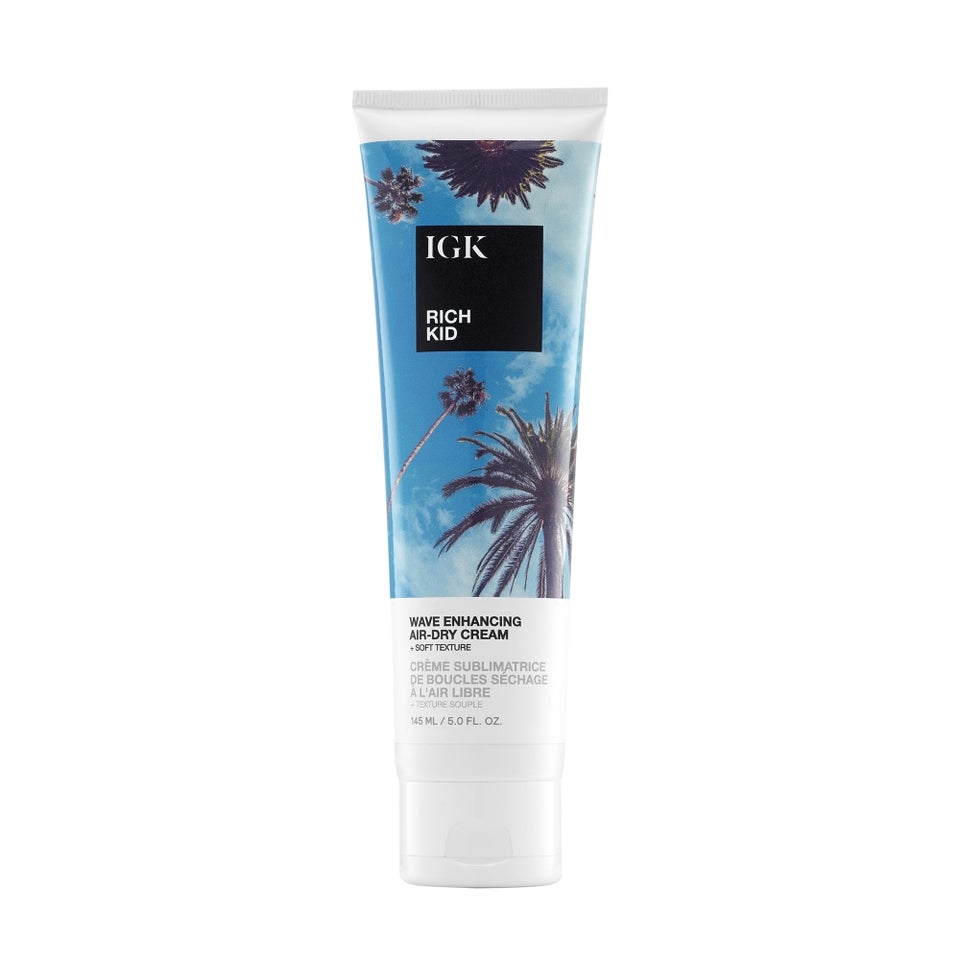
An air dry cream can support a Flamboyant Natural hairstyle without turning every wave into the same repeated curl. The useful question is where the product enters the routine and which shaping action preserves the broadest movement. IGK describes Rich Kid as a lightweight cream for tousled air dried texture. Its current directions distinguish finger combing, twisting, and scrunching by starting texture. That makes the exact product useful for a decision guide: twist when you need a clearer route, scrunch when an existing wave pattern already supplies one.
Start with the movement you already have
Before applying the product, identify the largest direction in the hair. It may be a loose bend through the lengths, an open S wave, or a broad sweep away from the face. Flamboyant Natural styling benefits when that major route stays legible. The cream should help organize it, not replace it with many small, equally emphasized pieces.
The current IGK Rich Kid directions identify it as a lightweight cream for tousled air dried texture. They say fine hair should begin with a small amount and build only as needed. That is a product direction, not a promise about a personal result. Hair density, porosity, existing texture, climate, and the amount used can all change the finish. Use the brand's current instructions and judge the visible shape after each step.
Twist when the line needs a clearer route
IGK's air dry directions for straight or lightly wavy hair say to work the product through almost dry mid lengths and ends, then twist small sections for waves. For a Flamboyant Natural result, keep those sections large enough to relate to the complete silhouette. A few broad twists can establish connected movement; many narrow twists can divide the surface into equal little accents.
Choose twisting when the starting texture is present but directionless. Wrap each section along the route you want the eye to follow. Leave space between shaped areas so the result can open as it dries. When the twists release, look for continuity from one bend to the next rather than perfect repetition.
Use three checks before adding another twist:
- The section reinforces the hairstyle's main direction.
- Its scale relates to the whole head rather than reading as a tiny detail.
- The outer outline remains easy to trace.
If those checks pass, the product is supporting the design. If the sections begin to look uniform or disconnected, stop shaping and let the existing movement carry more of the result.
Scrunch when the wave pattern already leads
For curly hair, IGK's current directions describe working product through hair and twisting or scrunching to encourage natural texture. Scrunching is the more useful choice when broad waves or curls already have a clear route. It can reinforce that pattern without prescribing a new one section by section.
Work with the largest visible groupings. Lift them toward their natural bend, release, and then assess the complete silhouette. Avoid treating every small section equally. The goal is not maximum texture everywhere; it is enough definition to keep generous movement readable. Quieter areas help the strongest wave route look intentional.
This is also where restraint matters. The directions do not establish how much any reader needs. Build from the smallest amount consistent with the current instructions. Add only when another application improves connection or clarity.
Decide by scale, not by technique alone
Twisting and scrunching are not competing rules. They solve different starting problems. Twist when the hair needs a broad direction. Scrunch when that direction already exists and needs support. In either case, the Flamboyant Natural test is the same: does the finished movement stay open, connected, and large enough to relate to the whole look?
If your unresolved question concerns a finishing spray rather than an air dry cream, the salt free texture spray guide uses a separate scale, movement, and outline test. Rich Kid belongs earlier in the routine and asks a different question about shaping as hair dries.
Compare the result from a normal viewing distance. A technique may look precise close up but fragment the silhouette from farther away. Keep the option that preserves the clearest route through the hair.
Use a simple stop rule
Stop adding product or shaping when one of three things happens: the main wave direction becomes harder to identify, small pieces begin competing equally, or the outline becomes more compact than open. Those are visual signals, not judgments about hair quality or a guaranteed response to the formula.
The most useful Rich Kid routine is therefore conditional. Start with the current brand directions. Twist larger sections when direction needs to be created; scrunch broader groupings when direction is already present. Then let the hair dry before making the final call. If the movement reads as one connected idea and the outline remains generous, the technique has done enough.