How to Balance a Black Blazer for Classic
A troubleshooting guide to deciding whether one black blazer distributes structure and length in a balanced way for Classic style.
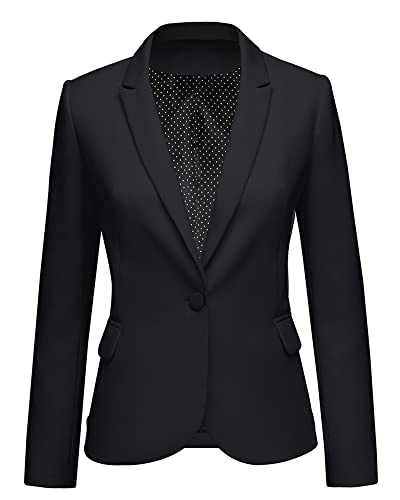
The exact luvamia black blazer reviewed here can support Classic balance only if its one button closure, notched lapel, shoulder padding, pockets, and short hem read as one moderate composition. The selected A New Black option in size XX Large was in stock when checked, but listing details cannot tell you how the jacket will sit on your body. Treat its slim fit label as a description, not a promise of correct fit.
The useful question is not whether every detail sounds Classic in isolation. It is whether the details divide the front into calm, connected sections. A button that sits low on you can lengthen the lapel and open front. Shoulder pads can add authority at the top. Pockets can anchor the lower half. The short length may help contain that vertical pull, but only your full mirror view can show whether these features reach equilibrium.
Read the front as one proportion
Begin at the button, then trace upward along the lapel and downward toward the hem. A button that sits lower creates a longer open shape above it. That can look polished when the lapel stays moderate and the hem arrives soon enough to close the composition. It can look elongated when the lapel dominates the torso or when the button seems detached from the jacket's lower edge.
Next, locate the two side pockets in relation to the button. The pockets should not create a second heavy band below a button that already sits low. If your eye moves smoothly from shoulder to lapel to button to pocket, the distribution is coherent. If it jumps from padded shoulders directly to low pockets, the center may feel empty and the jacket may read as top heavy and bottom heavy at once.
This is where general blazer fit guidance helps. It recommends reading button stance and lapel proportion while also checking the bust, shoulders, sleeves, and length. For a Classic decision, use those checkpoints together. A button position cannot rescue a pulling bust, and a tidy lapel cannot compensate for a sleeve or hem that visibly overwhelms your frame.
Diagnose where the blazer balance breaks
Stand in front of a mirror with the blazer buttoned, then unbutton it and compare. Do not style around a problem yet. Identify which relationship changes the visual balance.
- If the closure looks low, compare the lapel length with the distance from button to hem. A long upper section and compressed lower section can feel uneven.
- If the top looks heavy, check whether the shoulder pads and lapel both demand attention. Keep one clear structure cue and let the other stay quieter.
- If the lower front looks crowded, see whether the pockets sit close to the button or hem. Avoid a high contrast belt or long top that creates another stop.
- If the jacket looks longer than its listed short length suggests, check the sleeve endpoint and contrast between blazer and trousers. Strong contrast can emphasize each boundary.
A clean diagnosis prevents random adjustments. Changing jewelry, shoes, or trouser width will not correct a shoulder seam that sits incorrectly or a bust that pulls. It can, however, calm a sound fit whose visual distribution needs a small shift.
Keep shoulder structure in proportion
The listing specifies shoulder pads, so judge the top line before assuming the black color will make the structure disappear. View the shoulder from the front and side. The edge should look intentional, and the sleeve should fall without a pronounced collapse or ridge. Then compare that structure with the notched lapel. A moderate lapel can connect a defined shoulder to the center front; an oversized looking lapel may multiply the emphasis.
If the shoulder fit is your main uncertainty, start with the shoulder seam. That guide uses a khaki blazer and a shoulder first method. Return here once the shoulder is settled, because this black blazer asks a different second question: does the button placement distribute the remaining length evenly?
Check the sleeves with your arms relaxed and again while reaching forward. The exact listing confirms long sleeves and full lining, but it does not prove range of motion or ideal sleeve length for you. If the sleeves bunch heavily or the body pulls during ordinary movement, do not call that a styling issue. Consider a different size or jacket instead.
Use the blazer for the office without lengthening it
For an office outfit, repeat the blazer's controlled structure without adding several new stopping points. A simple top near the trouser color can reduce contrast through the open front. Straight trousers or a clean skirt can continue the composed line. The aim is not to hide a button that sits low, but to keep it from becoming the only focal point.
Let the pockets remain functional details rather than decoration. Filling them heavily may change the lower shape, and high contrast items peeking out can pull attention below the closure. Because the listing states 100 percent polyester, full lining, and machine wash care, follow the current care directions before cleaning and avoid assuming how the fabric will drape after wear.
Make the final decision from several steps away. The blazer works for this Classic purpose when your eye registers one polished jacket before it registers pads, lapel, button, pockets, or hem. Skip it when you keep trying to disguise button placement that elongates the torso, shoulder structure that dominates the face, or pockets that overload the lower front. Balance is the buying criterion, not the presence of any one supposedly correct detail.