Classic Navy Tea Dress: Petticoat or Pictured Flare?
A Classic decision guide to the navy DRESSTELLS tea dress, separating its pictured flare from an optional petticoat chosen for a fuller retro silhouette.
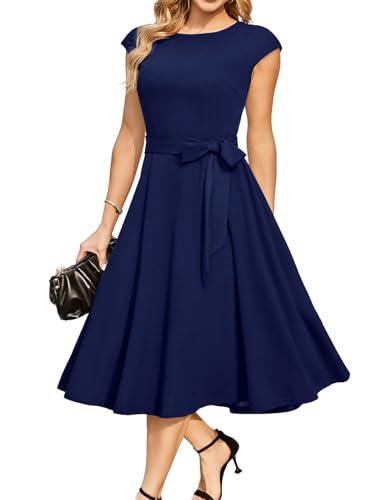
For a restrained Classic outfit, start with the pictured flare of this navy DRESSTELLS tea dress and treat a petticoat as an optional change of direction. Add one only if a fuller retro silhouette is the look you actually want. The useful question is whether to enlarge the skirt, rather than how to make an already flared dress look complete.
Start with the shape already present
The pictured dress combines a rounded neckline, short cap sleeves, a defined waist with a side bow, and a flared skirt. This example is Navy in Large. The retailer description calls the skirt A-line and mid calf, and identifies a detachable belt. Those details establish a starting shape, but the named length does not tell you exactly where the hem will land on your body.
For Classic styling, use moderate proportion and even visual pacing as a direction. Here, the waist separates a relatively quiet upper half from an expanding skirt. Before adding more fullness below it, decide whether you like that relationship already. A navy dress does not need extra volume simply because its styling has a vintage reference.
Treat the product photograph as an illustration of the outline you are considering. It does not establish what underlayers the model wears, how the skirt hangs on you, or what a separately purchased petticoat would do underneath it. Keeping those questions separate makes the choice clearer: you can prefer the pictured silhouette without needing to recreate unseen styling.
Choose the goal before adding volume
A petticoat decision often starts with uncertainty about whether more fullness will improve a dress. In one reader discussion about petticoat choices, the question is whether the extra volume changes the desired look. That bridal discussion concerns another dress; it helps name the dilemma, but cannot establish how an underlayer will work with this navy one.
Use the following decision rule to separate your preference from the assumption that a retro dress needs another purchase:
- Keep the existing flare as your starting point when you want a composed dress outline with the waist as its main accent.
- Explore a petticoat when a visibly fuller skirt is a deliberate part of your retro styling goal.
- Pause the underlayer purchase when you want the dress as pictured but cannot confirm what creates that photographed shape.
The Classic lens changes the priority: begin with the relationship between bodice and skirt instead of maximizing fullness. This is an editing preference, not a prohibition on expressive dressing. If you want the skirt to become the central feature, you can choose that emphasis knowingly. The resulting outfit simply has a different visual aim from the restrained starting point.
Let one detail carry the retro reference
With the pictured flare, use the waist bow as the lead detail and keep the surrounding choices relatively simple. Consider a plain shoe shape and a small bag with a clear outline. A limited palette gives the dress and its waist treatment room to read together. These are styling options to consider with pieces you own, rather than requirements attached to the dress.
The detachable belt offers another decision without requiring an underskirt. If the bow supplies enough interest, build around it. If you prefer less decoration at the waist, consider the dress without that detachable accessory, while remembering that its removal does not establish a different garment shape. Choose the waist treatment for its visual role, not as a promise of altered construction.
If a fuller retro skirt is your goal, let that larger outline take the lead. You might keep the shoe, jewelry, and bag quieter rather than adding several more period references. For a Classic approach, this gives the expressive skirt a calmer setting. You do not need to make every accessory equally prominent to communicate the idea.
Separate the dress choice from the underlayer choice
First decide whether you want the navy dress for its own neckline, waist detail, and flared outline. If it appeals only on the assumption that a particular petticoat will transform it, treat that as an unanswered purchase question. The dress listing does not establish compatibility with a separate underlayer. This guide does not identify an included petticoat or recommend an exact one.
Current offers and size availability have not been confirmed, so check the Navy option and size before ordering the dress. Before buying any underlayer, seek its garment length and fullness information and compare that with the dress details available to you. Do not infer a suitable petticoat length from the phrase mid calf alone. If the information is missing, postponing that extra purchase is a reasonable outcome. A styling preference cannot fill a gap in garment information.
Your final choice can stay simple. Choose the dress for the pictured flare when your goal is a balanced navy outfit with a clear waist. Consider extra skirt volume only when the fuller silhouette itself is the attraction and you can establish the practical details separately. That distinction keeps Classic balance useful as a styling direction while leaving room for a deliberate retro choice.