Soft Gamine Elisa Amethyst Pendant Style Checklist
A Soft Gamine decision guide for testing the Elisa amethyst pendant against neckline space, color connection, and competing detail.
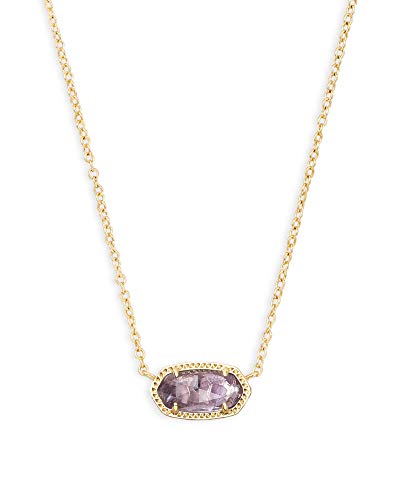
The Kendra Scott Elisa amethyst pendant can earn a clear role in a Soft Gamine outfit when its close placement and purple stone stay visible. Test three things: a quiet neckline window, one deliberate color echo, and restrained detail near the face. If the necklace still disappears after those edits, choose a piece with stronger scale or contrast.
The maker listing identifies the Elisa as an amethyst pendant with a 15 to 17 inch adjustable length. That close placement makes it useful for this test. Current availability is unknown, so confirm the listing before buying. The styling decision still depends on enough separation from neckline edges and other accents.
Decide what the pendant must do
Start with one job. The pendant might add a rounded point near the face, introduce a controlled purple accent, or soften a crisp collar. Do not ask it to provide color, sparkle, texture, and a complete focal point at once. A small piece becomes clearer when the rest of the outfit gives it a specific role.
For this Soft Gamine decision, use the pendant to build a compact sequence of distinct details with some curved softness. Compact does not mean filling every available space. Let the eye move between a defined neckline, the rounded stone, and one supporting accent, rather than one long uninterrupted sweep or a cloud of tiny details.
Use this first decision rule:
- Keep the pendant when you can name its role in one sentence.
- Restyle it when its color or shape is present but unclear.
- Skip it when several stronger details already occupy the face area.
Check the neckline window
Lay the necklace against the actual top or dress, then look from a few steps away. The small amethyst frame needs a quiet patch around it. A crew neck can work if the chain and pendant sit fully above the edge. A more open rounded or square neckline can work when the stone sits inside the open area rather than touching the fabric boundary.
Avoid letting the pendant land directly on a busy print, decorative placket, or dense trim. The issue is not that those elements are forbidden. They simply compete at the same scale. Move the chain slightly, change the neckline, or choose a calmer upper layer before deciding that the necklace itself is wrong.
The gold colored frame can create useful definition against cool purple, but only if both are visible. Check the necklace in ordinary room light, not just close to a bright mirror. If the stone and frame merge into the top from conversational distance, create more contrast with the neckline color or reserve the piece for a simpler outfit.
Connect the amethyst color
Repeat purple once, but change the scale. A small plum hair clip, violet shoe detail, or muted berry lip can connect the pendant to the full look. The second note should not be another tiny purple object sitting beside it. That would create repetition without direction.
A neutral outfit can also provide enough connection when the amethyst is the only color and the silhouette already has clear Soft Gamine rhythm. Try a fitted ivory knit with a defined hem and a dark compact skirt, then let the pendant become the controlled color point. The goal is a visible relationship, not a matching set.
Do not invent meaning from the gemstone to make the outfit work. Color, scale, placement, and personal preference are enough. David Kibbe's official site presents style as a head to toe image centered on the individual person. Treat this checklist as an experiment with the complete outfit, not a rule about who is allowed to wear amethyst. Your own taste decides whether the final result feels worth repeating.
Edit detail around the face
Count the active details from the shoulders up. Include a contrast collar, earrings, glasses, hair accessory, lip color, and the necklace. If several pieces demand attention at once, keep the two or three that make the clearest rhythm and quiet the rest.
For example, pair the pendant with small rounded studs and a crisp collar, then leave the hair accessory out. In another outfit, use the pendant with a curved hair clip and no earrings. These edits preserve animation while giving each detail breathing room.
If the necklace still disappears, do not automatically add another chain. Layering can create useful rhythm, but it can also turn a clear stone into one more fragment. First increase the neckline contrast or remove a competing detail. Add a second chain only when it creates distinct spacing and leaves the amethyst easy to locate.
Before buying, test the same three questions: Does the pendant have a clear neckline window? Can its purple connect to one other part of the outfit? Will you remove or quiet a competing detail when needed? Three yes answers make the piece easier to use. One or more no answers suggest waiting or choosing a necklace with stronger scale or contrast.
For another approach to a small necklace, compare these tiny pendant outfit formulas. Use that guide for outfit building after this checklist tells you whether the amethyst pendant has enough presence to begin.