How SCs Can Bronze Without Looking Overdone
Choose a bronzer shade and finish, use a stick with realistic expectations, and adjust application for subtle warmth or stronger evening color.
A Soft Classic bronzing look can be soft without being invisible. If you want gentle warmth, start with the finish you like rather than a rule about what your face can handle.
Use Soft Classic as styling inspiration, then choose for your own coloring, skin needs, and makeup preferences.
Build the color gradually and decide when it feels right. A softer look can still include visible makeup.
Choose warmth, shade, and finish separately
Bronzer and contour serve different goals. In IPSY's bronzer guide, makeup artists distinguish warmth from the shadows created with contour.
For this look, choose warmth first. You can add definition too, but you do not need a sculpted cheek or a complete contour routine to wear bronzer.
Do not buy a shade just because another Soft Classic wears it. Compare it with your own complexion and the makeup you already enjoy.
Makeup artist Maria Ortega recommends a bronzer around two shades deeper than your skin with a compatible undertone. Treat that as a starting point, not a universal shade match.
Before committing to a purchase, ask whether you want subtle color or visible contrast. A shade that suits the second goal may need more restraint for the first.
Cream is an option, not a requirement. IPSY's artists suggest powder for an oily complexion or a matte finish, and cream or gel for a more natural finish.
A liquid bronzer is not automatically too intense, and powder is not automatically chalky. Choose the format you can apply comfortably instead of replacing a product that already works for you.
Use the bronzer stick with realistic expectations
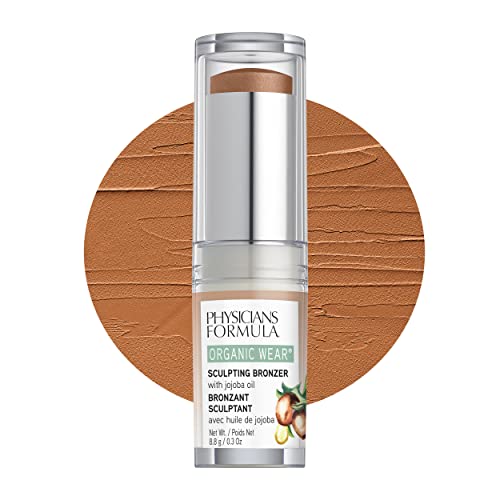
The featured Physicians Formula Organic Wear Sculpting Bronzer is the Toffee shade. Its product information describes a buildable cream to powder formula and lists jojoba oil, aloe, senna, and cactus flower.
Those are product descriptions, not a promise that the shade suits every Soft Classic. The ingredient names alone do not establish how the finished makeup will feel or look on you.
The product directions say to warm the stick on the back of your hand and blend with fingertips. They describe placement beneath cheekbones, below the hairline, along the jaw, and beside the nose.
That is a sculpting placement map. If your aim is diffuse warmth, you do not have to copy every line or turn each area into a dark stripe.
Decide which effect you want before applying. The distinction matters more than trying to make a bronzer stick perform every makeup job at once.
For a softer styling choice, make one area your focus instead of covering the entire face. You can leave the nose or jaw alone if you prefer that result.
Keep the product packaging available for its current ingredients and directions. Do not choose it on the assumption that an organic ingredient claim guarantees a particular skin benefit.
Apply a little, then decide what to add
Use a fluffy brush for powder, or fingers or a sponge for cream. IPSY recommends applying cream before powders and beginning with a small amount before building.
For a warmth effect, cheeks, temples, and forehead are possible starting areas. They are choices, not a checklist that every face must complete.
Work on one area before loading more product. Pause after blending so you can judge the color already there rather than automatically repeating the same sweep.
There is no required three or four layers. One application may meet your goal; another formula or desired intensity may call for more.
Look at your face from a comfortable distance as well as close up. Decide whether you like the overall balance before concentrating on a tiny edge.
If a line looks too strong, try softening its boundary before adding color beside it. More product should be a deliberate choice, not the default response.
Keep the rest of your makeup in mind. You might prefer a softer cheek with a bright lip, or more visible warmth with a simpler eye.
Troubleshoot the result you can see
If the bronzer looks too dark, stop building. Next time, begin with less or compare a lighter shade instead of deciding that bronzer itself cannot suit you.
If the color looks orange or gray against your skin, reconsider the shade. Adding more of a color you dislike will not help you decide whether it belongs in your routine.
If the finish seems patchy, simplify the next attempt. Change one thing, such as the amount or tool, so you can judge whether the result is better.
Avoid treating repeated blending as a requirement. Once the edge looks how you want, stop working that area and assess the full look.
For a visible stripe, ask whether you followed a contour placement while wanting overall warmth. Those are different looks, and either can be intentional.
Do not assign the problem to your Kibbe label. Describe what you see instead: an edge, an unwanted color, too much contrast, or a finish you dislike.
That description gives you a practical next choice. It also leaves room to keep a dramatic look when you enjoy it rather than correcting it to satisfy a rule.
Adapt the intensity to your day
For everyday makeup, try the smallest amount that gives the warmth you want. There is no need to add more because a tutorial uses a longer routine.
For work, choose the intensity you feel comfortable wearing. Bronzer does not measure professionalism, and you do not need extra coverage to look competent.
For evening, you can build more color if you enjoy it. Check the result alongside your eyes and lips rather than assuming that nighttime requires a heavier face.
If your outfit already feels detailed, you may prefer a simpler makeup look. If the clothes are understated, more visible bronzer can be an optional accent.
Keep what you like from each attempt: the shade, the tool, or the amount. Change the part that did not work instead of replacing the whole routine.
Soft Classic inspiration can guide an aesthetic without setting limits on your face. A successful result is one you choose to wear again.