Three Soft Classic Eyeliner Edges Compared
A side by side guide to fine, softly blurred, and outer corner eyeliner edges for Soft Classic balance.
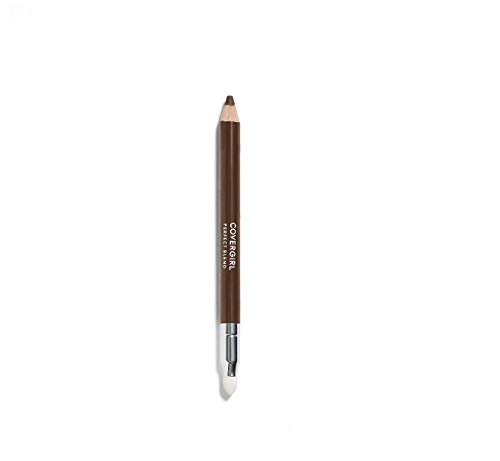
Soft Classic eyeliner edges can go wrong in either direction: a crisp line may look too severe, while a wide smoky haze may dissolve the balanced definition that makes the image identity feel composed. The useful question is not whether eyeliner should be “soft.” It is how much definition the edge keeps after you soften it.
This black brown pencil and its smudger make that question visible. Shade depth, line width, diffusion, and placement can all change without changing the rest of the face. Compare three edge structures under the same light, with the same mascara and brow treatment, so the difference comes from the line rather than a completely new makeup look.
Use One Baseline for All Three Edges
Begin with a thin mark pressed close to the upper lashes from the middle of the lid outward. Black brown creates less color separation than a dense black, but color alone does not guarantee a Soft Classic result. A thick, sharply extended line can still become the face’s dominant geometry. Keep the first pass narrow enough that the lashes remain the visual boundary.
Photograph or inspect the result straight on, then at conversational distance. Look for three things: whether both eyes carry similar visual weight, whether the liner clarifies the lash line without becoming a separate shape, and whether its outer endpoint relates to the brow and cheek rather than floating beyond them. These are composition checks, not rules about eye shape.
Edge One: Fine and Defined
The fine defined edge gives the greatest Classic clarity. Draw a narrow upper line, taper it before it becomes a long wing, and leave the lower lash line mostly open. This version works when the rest of the makeup already has gentle softness, perhaps a diffused cheek color or a softly blended neutral shadow, and needs one concise boundary.
Its risk is not simply “too much drama.” The problem appears when the line becomes an isolated graphic stripe: much darker than the lashes, thicker at one eye, or extended farther than the other. If that happens, shorten the endpoint first. Then soften only the outer few millimeters rather than blurring the entire line. Precision can stay visible without becoming rigid.
The Maybelline eyeliner tutorial library similarly treats a thin brown line as a route to a more natural in appearance result. For Soft Classic, the extra test is balance: the narrow edge should clarify both sides evenly and remain integrated with the complete face.
Edge Two: Softly Blurred
The softly blurred edge gives the clearest negotiation between Classic definition and Soft diffusion. Lay down the same narrow black brown line, then use the smudger only along its upper boundary. Keep the roots of the lashes defined while turning the top edge into a short gradient. Blur the border, not the placement.
This is often the most adaptable version because it preserves an organized starting shape. The pencil establishes symmetry; the smudger reduces hard contrast. Compare the two eyes before adding more pigment. If one side looks heavier, remove or diffuse that side instead of enlarging the quieter side. The goal is equal visual weight, not two mathematically identical marks.
A brown pencil technique in Shiseido’s beauty guide also places color along the upper lash line before blending it with a sponge or brush. The Soft Classic distinction is the limited blur: stop while the lash line still reads as a deliberate boundary. This keeps the effect polished rather than hazy.
Edge Three: Outer Corner Haze
The outer corner haze gives the most visible softness. Place a small amount of pencil at the outer third of the upper lash line and diffuse it inward and slightly upward, keeping the color close to the lashes. Do not automatically add a matching lower smudge. First judge whether the upper haze alone supplies enough emphasis.
This version can support an evening look or a face that needs a little more outer emphasis, but it has the smallest margin for imbalance. A broad triangle, a long diagonal tail, or dark color wrapped under the eye can turn a modest gradient into a separate smoky feature. Use the smallest area that changes the edge, and compare its width and height on both sides.
If the haze overwhelms the rest of the makeup, reduce its footprint before changing the shade. If it disappears completely, restore a narrow root line rather than spreading the blur farther. That sequence preserves the Soft Classic relationship: a clear central structure with controlled softness around it.
The best edge is the one that solves the actual composition problem. Choose fine definition when the face needs clarity, a softly blurred edge when it needs the most balanced blend of clarity and diffusion, or a compact outer haze when it needs localized softness. You can run the same comparison with any black brown pencil and a clean smudge brush, so the method remains useful before buying anything.