Should Romantics Buy This Oversized Cardigan?
A tailored buying guide to the LILLUSORY Light Grey cardigan, covering its oversized line, Romantic styling potential, care, and conflicting fiber claims.
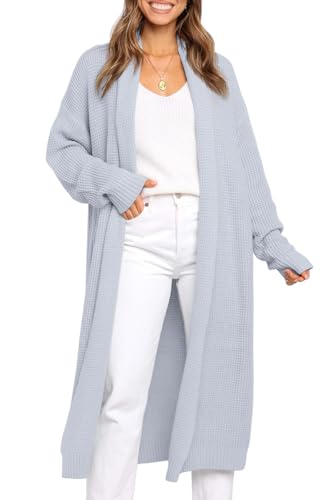
This LILLUSORY cardigan can work in a Romantic wardrobe only if its long oversized shape frames a clear waist cue instead of swallowing the outfit. The honest caveat is practical: the exact Light Grey Large listing gives two incompatible fiber compositions, so verify the material before buying rather than assuming the word "soft" settles the decision.
The selected page describes an open front, ribbed knit cardigan with long sleeves, stretch, and a below knee oversized cut. Those details offer softness and movement, but they also create substantial uninterrupted volume. For a Romantic outfit, the product is promising as a frame, not as a shapeless centerpiece.
Resolve the fiber contradiction first
The product details name 47% viscose, 32% polyester, and 21% nylon. A separate seller bullet on the same page says 50% viscose, 30% polyamide, and 20% polyester. Those totals both reach 100%, but they are not the same composition. The difference matters because the listing asks you to form expectations about feel, care, and wear from numbers that do not agree.
Federal Trade Commission textile labeling guidance explains the framework for identifying fibers and stating their percentages by weight. You do not need to adjudicate the regulation yourself. Your useful action is simpler: check the sewn in label after delivery, or ask for a clear photo of it before ordering Light Grey in size Large.
Do not substitute customer descriptions for that answer. A review can report softness or weight, but it cannot resolve which fiber statement belongs to the selected garment. If the seller cannot confirm the label, treat the material as unknown and decide whether the return process is worth that uncertainty.
Separate softness from Romantic proportion
A soft ribbed surface may support a curved, approachable effect. The cardigan's scale is the harder question. It is listed as oversized and below the knee, with an open front and no fastening to hold a shaped center. Left unchecked, those features can turn one soft layer into two long panels that hide the outfit underneath.
Use the cardigan as an outer frame around a defined inner column. A softly shaped top tucked into a high or natural rise skirt can keep the waist legible between the open edges. A dress with visible waist shaping can do the same. The cardigan should reveal that relationship while hanging easily; it should not need a tight belt over thick knit to manufacture shape.
Color placement helps. Light Grey is quiet enough to sit around a tonal or gently contrasted center, but the hem still creates a strong horizontal endpoint. Compare it with the skirt, dress, or trouser length you actually wear. If the cardigan hem and clothing hem stack close together, the result may look accidental. A cleaner version lets one hem lead and the other recede.
Run four checks on the exact cardigan
Use these checks before the soft focus product image does the deciding:
- Confirm the sewn in fiber label. Ask which of the two listed compositions belongs to Light Grey Large, and keep the answer with the order details.
- Map the open front. Wear the intended inner layer and check whether the cardigan edges reveal a clear waist relationship from the front and side.
- Judge both hems together. Photograph the full outfit with shoes, then look for one readable long line instead of several competing breaks.
- Accept the care and return terms. The page says hand wash only. Verify current availability, care, and return conditions before purchase.
A styling pass cannot cancel a failed product information check. If the fiber answer remains unclear, pause even when the shape looks good. If the composition is confirmed but the open front erases every waist cue, choose a shorter or less oversized layer.
Choose buy, verify, or skip
Buy when the seller confirms the label, hand wash care fits your routine, and the open front reveals rather than obscures your intended waist cue. The cardigan's soft ribbing and long relaxed frame can then add texture without asking the garment itself to provide all the shaping.
Verify before buying when you like the light grey color and fluid idea but cannot tell which composition is current. This is the strongest default for the exact listing today. A message to the seller costs less than discovering after delivery that the material or care expectation was built on the wrong bullet.
Skip when you need a closure, easy machine care, a precise fiber blend, or a layer that creates shape on its own. Also skip if the below knee hem crowds most of your dresses and skirts. Those are product mismatches, not styling failures.
If you keep the cardigan and want a related method for preserving soft shape under casual volume, use the Romantic hoodie layering guide. Its inner layer and waist cue logic transfers, while this cardigan adds a longer hem and an unresolved label question.
The answer is conditional, not coy: this cardigan has Romantic styling potential, but the exact listing has not earned an uncomplicated purchase. Confirm the fiber label first. Then judge whether the long open front frames the outfit you already own.