Natural Makeup With Matte Foundation That Stays Soft
A center out foundation method that keeps matte coverage even while preserving the open, softly defined quality of natural makeup.
Matte foundation can create an even base, yet too much uniform coverage can make natural makeup look rigid and one dimensional. This guide is for anyone who wants natural makeup with matte foundation while keeping the face open, softly defined, and recognizably alive.
The practical outcome is a placement map rather than a promise about one finish. You will concentrate coverage where it helps, fade the edges, and review the face at three distances before deciding whether another layer is necessary.
Prepare for Coverage, Not Perfection
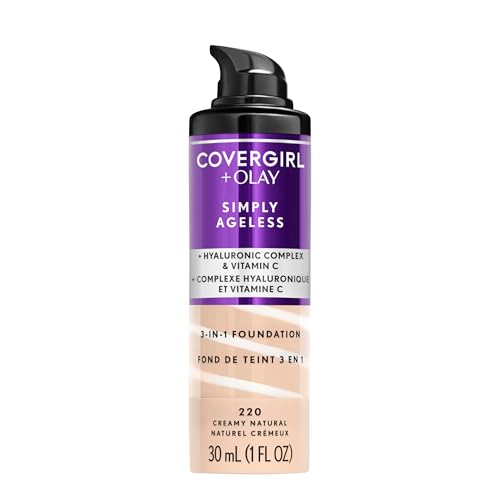
The CoverGirl and Olay Simply Ageless liquid foundation comes in shade 220 Creamy Natural and lists hyaluronic complex and vitamin C in the formula. The product directions call for dots on the forehead, cheeks, and chin, blended with fingertips or a makeup sponge. Treat those directions as a starting layout, not a requirement to coat every part of the face equally.
Use skin care that already suits your skin and allow it to settle before makeup. The American Academy of Dermatology's moisturizer guidance explains that dry, oily, and combination areas may need different choices. That supports a simple prep rule: address the skin you have today instead of forcing one heavy layer everywhere.
Check shade at the jaw and in natural light. Shade 220 is a specific option, not a universal match and not a Kibbe recommendation. If it does not disappear between the face and neck, choose another shade before trying to correct the mismatch with bronzer or powder.
Build Natural Makeup With Matte Foundation
Place the smallest amount through the center of the face, especially where you want more evening. Keep the first pass light across the forehead, around the nose, and on the inner cheeks. Blend outward with less and less product on the tool so the edge becomes sheer before it reaches the hairline and jaw.
A Sephora foundation application guide likewise recommends beginning with a small amount, working from the center outward, and pressing the outer edges with a clean damp sponge for a skinlike transition. The useful idea is not the exact tool. It is the gradual decrease in coverage.
Pause after one thin layer and look away from the mirror for a moment. When you look back, notice whether you see an even face or a matte surface first. If the finish announces itself before the features do, remove excess at the perimeter with a clean sponge rather than adding more color on top.
Build only where the first layer leaves a distraction you actually want to soften. Tap a small amount over that area and blur its edge into the existing base. Targeted coverage preserves natural variation better than repeating a full second layer.
Restore Broad Dimension Without Hard Contour
A matte base reduces reflected light, so the face may need color placement to recover dimension. For natural lines, use a broad, softly blended shape instead of a narrow stripe of contour. The goal is not to manufacture bone structure. It is to keep the foundation from turning the face into one uninterrupted tone.
Place blush across a generous area of the cheek and diffuse the edge with the same clean tool used for foundation. Keep brows softly substantial rather than sharply carved, and choose a lip edge that is clear but not severe. These choices create open definition around the matte base.
Set only the areas that tend to move on you. A small amount of powder around the nose or another familiar crease may be enough. Covering the entire face with another matte layer can erase the variation you preserved during application.
If you prefer stronger eye or lip color, keep the base quieter. If you prefer a nearly bare eye and lip, allow a little more visible skin texture or cheek color. This tradeoff creates focus without demanding sharp contour from every feature.
Use the Three Distance Finish Test
Begin close to the mirror and inspect only mechanics. Look for an unblended edge near the nostrils, hairline, jaw, or brows. Press those edges with a clean sponge or fingertip. Do not use this distance to judge the whole face, because close inspection exaggerates texture.
Move to conversational distance and find the first feature you notice. The eyes, brows, cheeks, or lips should lead. If the base leads, soften one boundary or lift a small amount at the outer cheek. The face should remain the focal point.
Finally, step to room distance and compare face, hair, neckline, and clothing. Natural makeup benefits from a base that belongs to the complete look rather than a separate polished mask. Broad color and softly blended edges should connect with the relaxed scale of the outfit.
Before leaving, check the result in one source of daylight if possible. Daylight can reveal a shade edge or excess powder that indoor lighting softens. Correct the smallest visible issue and stop rather than restarting the entire base.
Natural makeup with matte foundation stays soft when coverage is strongest only where it serves a purpose. Begin at the center, fade the perimeter, restore broad dimension, and let the three distance test decide whether the application is finished.