Green or Gold? A Flamboyant Gamine Clutch Guide
Choose between repeating the gold tone or the green in this geometric clutch. Two outfit routes use existing accessories, crisp edges, and separated contrasts through an optional Flamboyant Gamine lens.
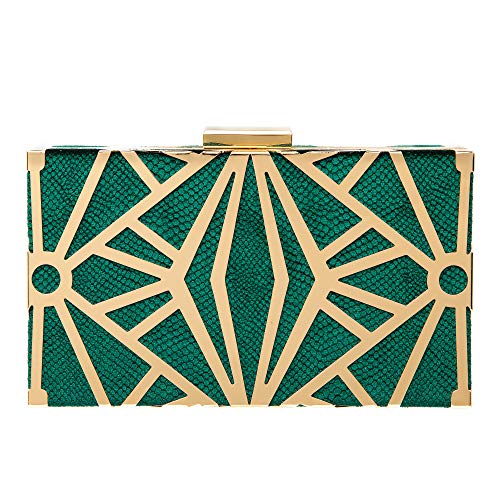
With this green geometric clutch, repeat either the gold tone in your jewelry or the green in one small accessory. You do not need matching shoes, jewelry, and a bag. For a Flamboyant Gamine interpretation, make the repeat precise, keep the outfit visibly divided, and borrow one angular shape from the clutch. Those choices give you two different outfits from the same bag, using pieces you may already own.
The CARIEDO Green clutch shown here has a rectangular green face, a gold tone geometric overlay, and a top clasp. Its color and geometry offer separate starting points. The gold can connect the bag to earrings while green stays concentrated at your hand. Alternatively, a small green accent can connect the color while black shoes keep the lower outfit distinct. Choose the route that suits your wardrobe before adding another accessory.
Read the bag before choosing the repeat
Look at the broad green areas first, then at the bright lines across them. The lines form a pattern inside a firm rectangular outline. A plain green bag would offer color alone; this one also gives you a shape to repeat. An angular earring, a square neckline, or a clean jacket edge can pick up that geometry without copying the entire pattern.
Use Flamboyant Gamine as an optional styling lens here. The proposed outfit uses short visual intervals, contrasting areas, and clear edges. It does not require a particular body, and a bag cannot confirm a type. The practical difference is where you place a repeat. A small accent separated from the bag lets the eye register distinct pieces, while a continuous green outfit would produce a different effect.
Start with a black dress you already like. Identify one existing break, such as its neckline, hem, or jacket edge. You can also use a black top and skirt with a visible waistband. There is no need to replace your clothes to follow the idea. The bag supplies its own rectangle; the outfit only needs a deliberate relationship to it.
Echo the gold for a graphic black outfit
Choose the metal route if you own simple gold tone earrings. With a black dress, use a small angular pair rather than trying to reproduce the bag's whole lattice. A rectangle, triangle, or short straight drop gives the repeated finish a different size. Keep the shoes black so the green remains a separate block rather than the start of an expensive matching set.
Jovani's advice on choosing a clutch includes coordinating metal or finish when clothes already carry detail. Here, that general principle becomes a specific choice. Repeat the bright finish near your face and let the clutch carry the green. The suggested angular earring and separated contrasts are this outfit interpretation, rather than a rule from the dressmaker.
For the Flamboyant Gamine version, give the black base a crisp interruption. Try a short jacket whose hem ends clearly above the dress hem, or a neckline with a definite corner. This changes the outfit's proportions without adding another color. If your dress already has an angular neckline, use that and skip the jacket. The metal repeat should connect two separated points, not spread into gold shoes and a gold belt by default.
Echo the green for a small color rhythm
Choose the color route if you already have a green ring, hair clip, or small earring that looks related to the bag. Put that accent away from your hand so the repeat is visible. A green hair clip with black clothing creates two separated color marks. A ring beside the clutch is a subtler choice, but it may read as one cluster rather than a repeat across the outfit.
A related green is enough for this proposal; assess the pieces together in the light where you will wear them. A yellow green clip and a deep blue green bag may look intentionally different, or may be a mismatch you dislike. If the pairing bothers you, return to the gold route. Buying another green item solely to chase an exact shade defeats the purpose of working with your wardrobe.
Keep the remaining jewelry simple in this version. If you choose green earrings, let their outline provide the angular cue. With a rounded green accent, take that cue from a square neckline or a sharply defined shoe instead. This is the second route's key distinction. Color supplies the connection, geometry supplies the structure, and a black shoe preserves a separate end to the outfit.
Decide with the pieces you already own
Lay out the dress, clutch, shoes, and the single repeat you chose. Compare the two routes using the same clothes. Ask whether you prefer a connection through bright metal or through green, and whether each piece still has a clear edge. Your preference is the deciding factor; the type lens offers a way to arrange the outfit, not a promise about how everyone will see you.
- Choose the gold route when your existing angular jewelry repeats the bag's finish and your shoes can stay black.
- Choose the green route when one accessory relates to the bag's color and the outfit still has distinct contrasting areas.
- Return to what you own when either route starts a shopping list for matching shoes, a belt, and extra jewelry.
Before purchasing the clutch, check the current Green option, photographs, dimensions, and return terms. Availability is unconfirmed, and product options can change. Compare the current measurements with your essentials before choosing it. If your present bag already creates the color and shape relationship you want, use it. The useful result is a repeat you can explain and enjoy, with no obligation to complete a set.