Should Dramatics Buy This Ruched Black Dress?
A tailored checklist for deciding whether the Missufe long sleeve ruched black sheath keeps a clean Dramatic line through fit, movement, and finish.
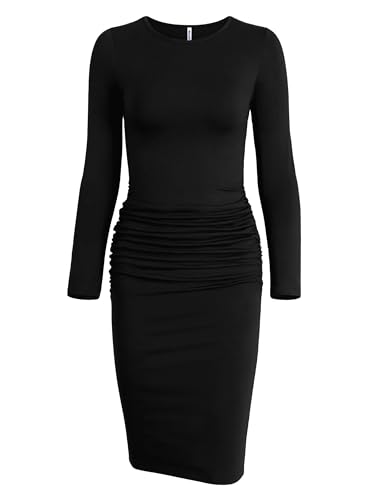
This Missufe black dress can work for a Dramatic when its side ruching reads as one controlled direction and the close long sleeves connect cleanly to the knee length sheath. The caveat is important: gathering can either reinforce a long line or divide it into short horizontal sections. Treat the dress as a try on decision, not an automatic match.
Start with the line, not the size label
The product combines a crew neckline, long sleeves, a close bodycon shape, side ruching, and a knee length hem. On a Dramatic, those parts need to read together. Stand far enough from the mirror to see the whole outline. If your eye moves from shoulder to hem without stopping at several bands of gathering, the dress is doing the useful work.
A size tag cannot answer that visual question. Research on online apparel fit identifies size and fit mismatch as an important reason shoppers return and reorder clothing. That is a good reason to compare the retailer's current measurements with a dress you already own, while keeping the return window available. It is not evidence that everyone should size up or down.
Use this first pass check:
- The shoulder and sleeve line lies cleanly without twisting.
- The gathers point in one consistent direction rather than stacking into bands.
- The hem reaches a place that feels intentional with the close upper line.
If one of those conditions fails, pause before trying to solve it with shoes or jewelry. Accessories can extend a successful line, but they cannot repair ruching that keeps collapsing into visual stops.
Check what the side ruching actually does
The useful question is not whether ruching is generally flattering. Ask where this dress places its fullness and whether that placement stays controlled on you. Smooth the gathers once, then let the fabric settle naturally. A clean diagonal or gently rising set of folds can add shape without sacrificing direction. Dense, level folds across the middle create a different result.
Look at the dress from the front and side. The black color reduces contrast, but it does not erase construction. If the ruching collects at one point, check whether a small adjustment distributes it or whether it immediately returns to the same bunch. That difference separates an easy styling choice from a recurring fit problem.
The recent guide to a sleek ribbed midi dress focuses on keeping a textured dress visually restrained through styling. This sheath needs an earlier decision. Its gathering should pass the line check before you build an outfit around it.
Run a movement and recovery check
A still mirror view is only the first frame. Sit in a chair, walk across the room, reach forward, and raise both arms. Then stop without rearranging the dress. The goal is not perfect stillness. The goal is to see whether the hem, sleeves, and gathers return to a position you would willingly maintain.
Check three things after movement:
- The hem returns to an intentional knee area length instead of remaining caught higher.
- The side gathers settle into one direction without repeated pulling.
- The sleeves and shoulder line recover without dragging the neckline off center.
Product family feedback varies on how closely this dress fits through the upper body and middle. That disagreement is useful because it argues against a universal sizing shortcut. Your movement result, the listed garment measurements, and the seller's current return terms are more actionable than a stranger's size label.
A Dramatic outfit often benefits from a decisive line, but decisive does not mean restrictive. If normal sitting and walking require constant correction, the dress is not delivering a clean result in practice. Skip it or compare another size while the return option remains open.
Make a buy, tailor, or skip decision
Buy the dress when the ruching stays directional, the sleeve to hem proportion reads as one column, and ordinary movement does not leave the garment displaced. The black color then gives you a quiet base for one elongated finishing choice, such as a pointed shoe or a long, clean coat line.
Consider a simple alteration only when the issue is stable and clearly located, such as a hem length that is consistently close to ideal. Do not assume tailoring can fix side gathers that migrate unpredictably or a shoulder line that twists during movement. Those problems are tied to how the whole close fitting garment interacts with you.
Skip when you need to keep redistributing the ruching, when the hem repeatedly rides to a length you did not choose, or when the sleeve and neckline pull against each other. That is not a verdict on your proportions. It is evidence that this specific cut is asking for more management than it returns in visual clarity.
The best version of this dress for a Dramatic is not merely tight or black. It is controlled. When every visible part keeps the same direction before and after movement, the sheath can create the long, focused impression promised by its simple outline.