Is This White Cape Maxi Courthouse Ready?
The MAYFASEY white cape maxi can bring clear ceremony drama for a Dramatic reader, but only after opacity, sizing, alterations, slit behavior, and cape movement pass a practical check.
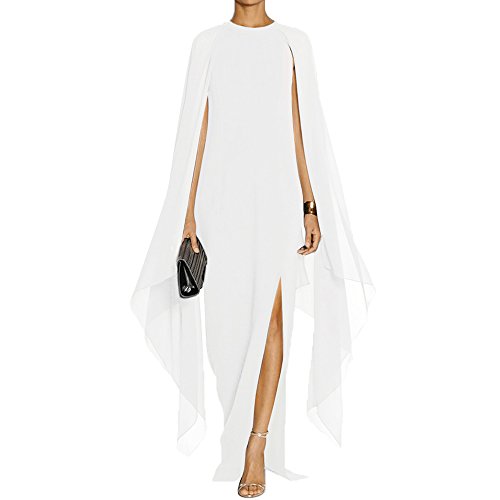
The MAYFASEY white cape maxi could be a striking courthouse or nontraditional wedding choice for a Dramatic reader, but it is not automatically ceremony ready. Its floor length line, round neckline, front slit, and cape sleeves create a strong formal statement. Before relying on it, confirm the white fabric is opaque in your ceremony lighting, the ordered size leaves sensible alteration options, and the cape moves cleanly through the actual day.
Decide whether the dress fits the ceremony brief
Start with the event rather than the bridal label. The exact product details describe a white, floor length formal maxi with a round neckline, a front high slit, a polyester and spandex torso, and chiffon cape sleeves. Those elements can look ceremonial without traditional lace, a train, or dense decoration.
That makes the dress most plausible for someone who wants a clean entrance with one memorable gesture. The cape supplies movement and the slit interrupts the long column. You do not need to add a sparkling belt, oversized jewelry, and elaborate shoes to make the outfit feel significant. In fact, extra detail could make the cape and slit compete.
Wedding editors include white maxis and cape details among courthouse dress ideas, but that broad possibility is only a starting point. A courthouse may involve security, narrow corridors, waiting, sitting, signing documents, and walking outdoors. Your version of the dress has to work through those moments, not only in a standing photograph.
If your occasion is less formal or you want a shorter pale dress, the ivory mini styling guide answers a different question. This maxi deserves its own decision because the floor length skirt, cape, and ceremony role change the practical stakes.
Read the cape maxi through Dramatic lines
For a Dramatic approach, the strongest feature is the dress as one long, direct statement. The round neckline can keep the upper edge controlled, while the floor length skirt extends the eye downward. The front slit adds a sharp opening rather than another soft layer. Together, those details may support a clear vertical impression.
The cape is the variable. Its volume can frame the long column, or it can blur it if the fabric gathers around the arms and sides. Look at the dress from the front, side, and back while standing still and while moving. You are checking whether the cape reveals a sleek center or turns the whole outline into floating fabric.
Keep the styling quiet enough to see that answer. A small earring, a smooth shoe, and a simple bouquet let the dress remain the main shape. A highly embellished veil, a broad necklace, or several strong accessories may divide attention near the round neckline. Personal taste comes first, but editing gives the dress a fair chance to show its intended line.
The most useful Dramatic question is not whether every detail is severe. Ask whether the full outfit reads as one intentional direction. If the cape, slit, bouquet, jewelry, and shoes each demand separate attention, remove one element and look again.
Test the practical risks before committing
White fabric needs an opacity check in more than one setting. Wear the underlayers you plan to use, then look in daylight, indoor overhead light, and direct camera flash. Check the front, back, slit area, and any point where the fabric stretches. A result that seems fine in a bedroom mirror may change near a courthouse window or under photography lights.
Sizing and length also need evidence from the garment on your body. Buyer reports collected by retailers are mixed, with recurring uncertainty around sizing, length, cape handling, quality, and formal use. Treat those reports as reasons to inspect your own dress, not as a prediction of what every order will be like.
Use this purchase check before removing tags or passing a return deadline:
- Sit, stand, climb steps, and sign at table height without pulling the slit or neckline out of place.
- Walk in the ceremony shoes and confirm the hem clears the floor or can be altered cleanly.
- Raise, bend, and extend both arms to see where the chiffon cape catches, drags, or covers your hands.
- Ask an alterations professional whether the hem, slit, torso, and cape can be adjusted without changing the dress you chose.
Do not use the stretch fiber content alone to decide whether the delivered size is suitable. Inspect the individual garment with your chosen underlayers and planned movements. Chiffon behavior and perceived quality can also vary by garment and setting, so one review cannot settle either question.
Build a restrained courthouse plan
Once the dress passes the practical checks, plan the ceremony around its two strongest signals: the long white column and the cape. Choose shoes based first on hem clearance and walking conditions. Then decide whether their shape supports the direct line. A clean pointed or narrow profile can be useful, but stability and the actual venue surface matter more than an abstract style rule.
Keep the bouquet or carried item compact enough that it does not trap the cape against the body. Practice holding it, opening doors, signing, and sitting. If you will wear a coat, test it over the cape before the day. Sleeves that look graceful in open space may bunch inside close outerwear.
Accessories should serve the neckline rather than fill it. The round neckline already creates a complete upper boundary. Earrings or a hair detail can add ceremony polish without layering another large shape across the chest. If you want a veil, test its edge against the cape from the back so the two fabrics do not create an accidental tangle of lengths.
The final decision is practical and visual at once. Choose this MAYFASEY maxi when the white fabric passes your opacity standard, the size and hem allow the needed alterations, the slit stays controlled in motion, and the cape frames a clear long line. If any of those checks fail, the dress is not a reliable substitute for a wedding gown simply because it is white and formal. Deferring it protects the ceremony plan and leaves room for a dress you can trust through the whole day.